Standards Def for AI Agent Systems: Build Interoperability as a Workflow, Not a Glossary

Most teams reach for a standards def when integrations start breaking. The SDK returns a different shape than the plugin expected. The agent calls a tool with missing context. The payment event arrives before the entitlement update. Nobody knows whether the failure is in the model, the connector, the auth layer, or the product workflow.
Teams think the problem is naming. The real problem is coordination.
In AI agent systems, a standards def is not just a definition of terms. It is the operational contract between identities, tools, permissions, events, credentials, payments, reviews, and audit logs. If that contract is vague, every integration becomes a local exception. If it is explicit, teams can build reusable agents, plugins, hosted products, and SDKs without re-litigating trust on every call.
That changes the conversation. The practical question is not whether your organization has standards. The practical question is whether your standards survive runtime.
Table of contents
- Why standards def is an architecture problem
- What a useful standards def must cover
- Identity and authority are the first standards surface
- Events make agent systems operable
- MCP, plugins, and tool calls need runtime contracts
- Credentials and data sharing need scoped standards
- Payments and settlement add hard edges
- A practical implementation workflow
- Common failure modes in standards def work
- Where logicsrc.com fits
- Closing checklist for standards def decisions
Why standards def is an architecture problem
A standards def becomes useful when it stops being a vocabulary page and starts constraining system behavior. In agent platforms, that behavior spans more than an API response. It includes who invoked the agent, which tool was selected, what authority was delegated, what data moved, whether a human reviewed the action, and how the result was recorded.
The mistake teams make is writing standards for readers instead of implementers. A human can infer intent from a paragraph. A runtime cannot. An SDK cannot guess whether a missing field means unknown, denied, redacted, not applicable, or not yet populated.
The definition is not the deliverable
A useful standards def produces artifacts that engineers can build against:
- schema definitions for core objects
- event names and payload contracts
- state machines for long-running workflows
- permission scopes and delegation rules
- conformance tests and example fixtures
- operational guidance for retries and failures
If the standard cannot be tested, it is probably a guideline. Guidelines are fine for writing style. They are weak for agent execution.
Practical rule: Treat every standard as an executable contract. If an SDK, gateway, or test harness cannot validate it, production teams will reinterpret it.
Interoperability fails at the boundaries
Agent systems rarely fail in the happy path demo. They fail at boundaries: agent to plugin, plugin to payment system, model output to policy engine, credential store to external API, hosted product to audit log.
A useful way to think about it is this: your standards def should describe the handoff points where ownership changes. The agent proposes. The tool executes. The platform authorizes. The user approves. The payment layer settles. The audit system records. If those handoffs are undefined, every product team invents a local version.
What a useful standards def must cover
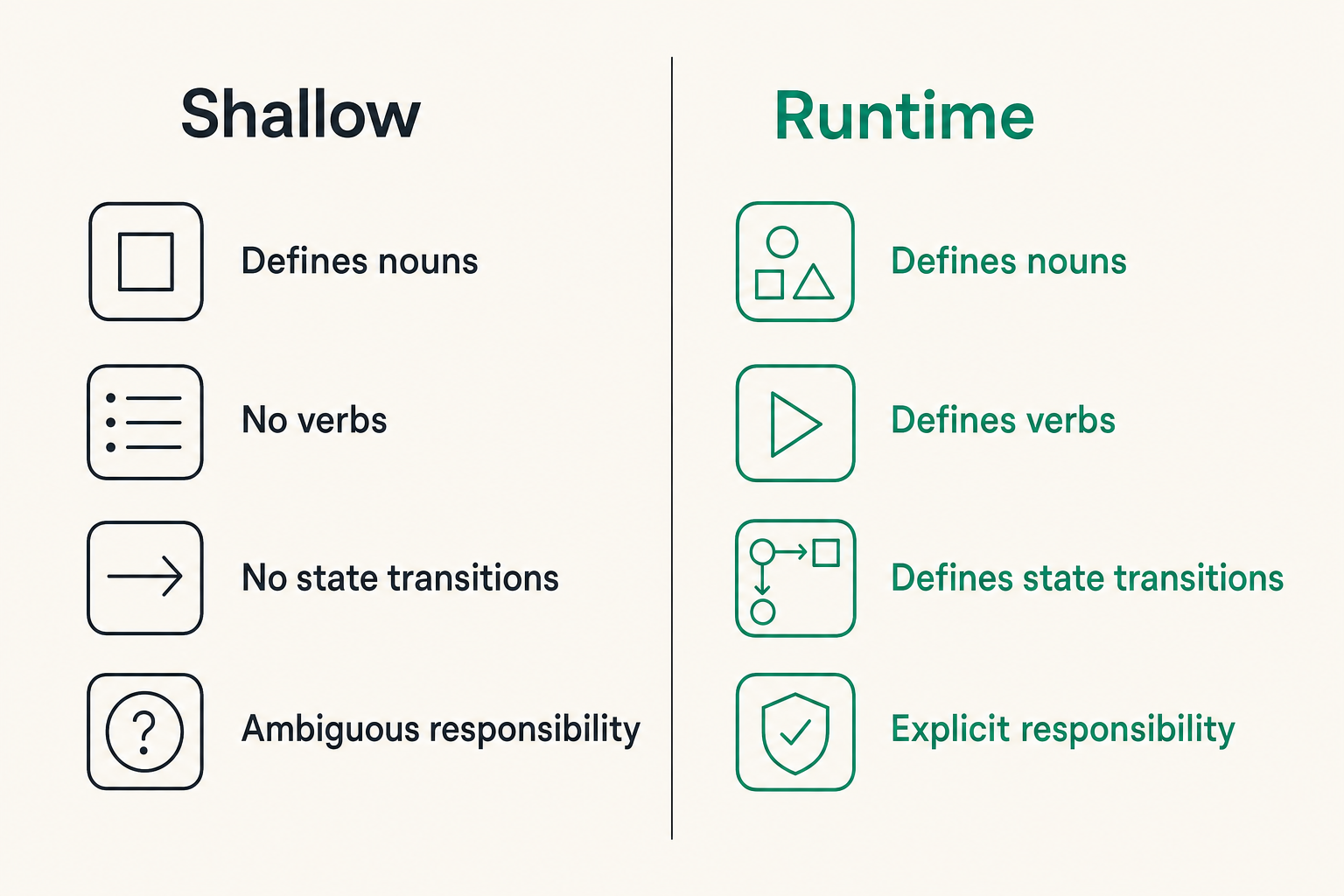
A shallow standard defines nouns. A production standard defines nouns, verbs, transitions, and responsibility. That is the difference between a JSON object that looks reasonable and a workflow that survives retries, partial failures, and support tickets.
Objects, verbs, and state transitions
Start with the objects that cross boundaries. For agent systems, common objects include:
- actor
- agent
- session
- tool
- capability
- credential
- consent grant
- event
- payment intent
- task
- review
- audit record
Then define verbs. Not marketing verbs. Runtime verbs: request, approve, deny, invoke, suspend, retry, revoke, settle, reconcile, archive.
Finally define allowed transitions. For example:
task:
  states:
    - created
    - authorized
    - running
    - waiting_for_review
    - completed
    - failed
    - cancelled
  transitions:
    created: [authorized, cancelled]
    authorized: [running, cancelled]
    running: [waiting_for_review, completed, failed]
    waiting_for_review: [running, completed, cancelled]
This looks basic until a production incident asks whether a failed tool call can be retried after user consent expires. If the state machine is not explicit, the answer becomes a Slack debate.
Trust, ownership, and failure semantics
Every standard should answer three operational questions:
| Question | Weak answer | Useful answer |
|---|---|---|
| Who is responsible? | The platform handles it | The invoking service owns retry until terminal state |
| What happens on failure? | Return an error | Emit task.failed with reason, retryability, and actor context |
| Can another system verify it? | Logs are available | Audit record includes event id, actor id, scope, timestamp, and previous state |
What breaks in practice is not that teams forgot a field. It is that they forgot the consequence of the field being absent, stale, or contradictory.
Related reading from our network: teams building cloud-visible systems face a similar contract problem between infrastructure, crawlers, and documentation in Google Compute Engine and AEO crawler visibility.
Identity and authority are the first standards surface
An AI agent is not a user, not a service account, and not a traditional integration. It may act for a human, on behalf of an organization, through a hosted product, using a tool maintained by a third party. If your standards def collapses all of that into user_id, you have already lost important context.
Separate actor identity from execution context
You need at least four concepts:
- principal: the human, organization, or system with original authority
- agent: the automated actor making decisions or proposing actions
- executor: the service, plugin, or tool performing the operation
- context: the session, task, policy, and environment surrounding the action
These should be represented separately even when they point to the same account. A user running a local agent is different from a hosted agent running a scheduled workflow for that user.
A practical event payload might look like:
event_type: tool.invocation.requested
principal_id: org_123
agent_id: agent_research_7
executor_id: plugin_crm_sync
session_id: sess_456
task_id: task_789
scope: crm.contact.write
policy_decision: allow_with_review
The value is not elegance. The value is investigation speed. When something goes wrong, you can tell who had authority, what component executed, and which policy decision allowed it.
Make delegation inspectable
Delegation should not be an implied side effect of login. It should be a visible grant with scope, expiry, issuer, subject, and revocation path.
Practical rule: If an agent can act on behalf of a human or organization, the delegation must be inspectable by another system without asking the original UI.
This matters for open source maintainers and platform builders. Your plugin cannot assume every host uses the same auth model. Your SDK cannot assume every tool call runs inside one vendor control plane. A standards def should make delegation portable enough to verify without making it so broad that it becomes a bearer token with better branding.
Events make agent systems operable
Events are where standards become operational. A model can generate a plan. A plugin can expose a method. But the platform still needs to know what happened, in what order, under whose authority, and whether the result is final.
Event contracts beat callback folklore
Callback handlers often start as internal glue. Then a customer asks for audit trails, a partner asks for webhooks, and a second agent needs to react to the same event. Suddenly the callback is a public contract, but nobody designed it like one.
A standards def for events should specify:
- event type naming
- stable identifiers
- causality fields such as correlation_id and parent_event_id
- versioning rules
- delivery semantics
- retry policy
- terminal vs non-terminal events
- redaction expectations
For adjacent architecture thinking, the same workflow-over-response pattern appears in media systems; related reading from our network: Django Streaming in 2026 is useful because streaming breaks when teams treat delivery as a single response instead of a stateful pipeline.
Idempotency is part of the standard
Idempotency is not an implementation detail you can leave to client teams. If agents can retry actions, the standard must define how duplicate requests are recognized.
At minimum, require:
- idempotency_key on mutating operations
- stable task_id for long-running work
- event_id for emitted events
- replay-safe handlers
- documented behavior for duplicate terminal events
Practical rule: Any agent action that changes external state needs an idempotency strategy before it gets a public interface.
Without this, one timeout can become two invoices, two support tickets, two repository comments, or two credential grants.
MCP, plugins, and tool calls need runtime contracts
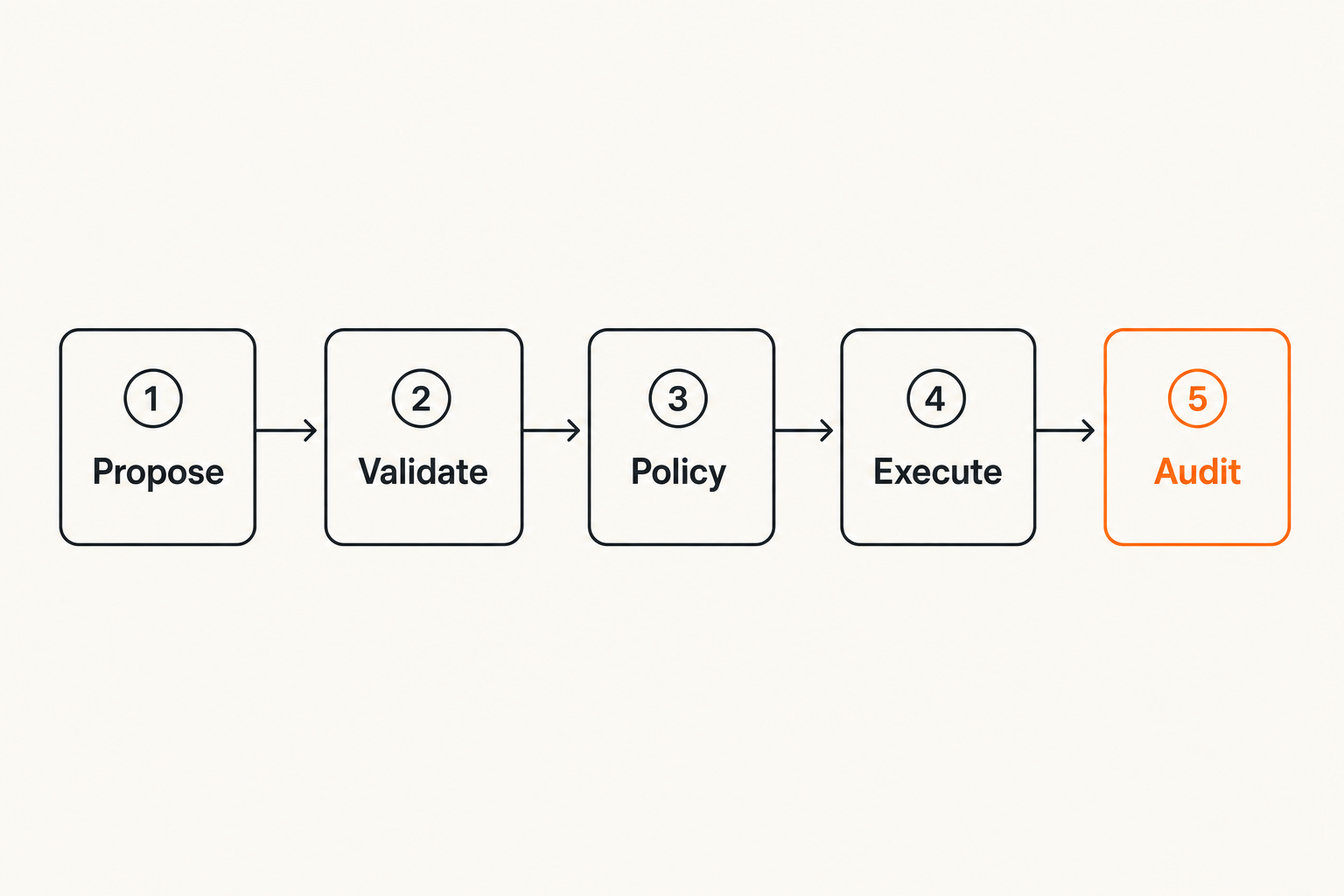
MCP and plugin interfaces give agents a way to discover and call tools. That is useful, but discovery is not governance. A tool schema can tell the agent which parameters exist. It does not automatically tell the platform whether the tool is safe, billable, reversible, rate-limited, or subject to human approval.
Describe capability, not just endpoint shape
Endpoint-first standards tend to say: here is the method, here are the parameters, here is the response. Agent-first standards need more:
| Surface | Endpoint-only view | Runtime contract view |
|---|---|---|
| Tool | Function name and args | Capability, risk level, scopes, side effects |
| Auth | Token accepted | Delegation, expiry, issuer, subject, revocation |
| Output | Response schema | Confidence, provenance, redaction, next allowed actions |
| Failure | Error string | Retryability, compensation path, audit event |
| Review | Not specified | Human gate, policy reason, reviewer identity |
A tool that reads a document is not the same as a tool that emails a customer, transfers funds, publishes code, or changes DNS. Your standards def should make those differences machine-readable.
Use policy gates around tool execution
A practical tool execution flow looks like this:
- Agent proposes a tool call with purpose and expected side effect.
- Runtime validates schema and required scopes.
- Policy engine evaluates actor, tool, data class, amount, and environment.
- Human review is requested when policy requires it.
- Executor performs the action with an idempotency key.
- Event stream records request, decision, execution, and result.
That sequence is more important than the transport. Whether the call moves over MCP, HTTP, a queue, or an internal SDK, the standard should preserve the same control points.
Credentials and data sharing need scoped standards
Credential sharing is where sloppy standards become security incidents. Agents need access to APIs, files, SaaS accounts, payment rails, customer data, internal tools, and sometimes secrets. If the standard says pass credentials to the tool, it is not a standard. It is a liability.
Share claims instead of raw secrets
The safer pattern is to share claims, grants, and delegated capabilities rather than raw secrets. A tool should receive enough authority to perform the approved action, not a long-lived credential it can reuse outside the workflow.
This is why scoped credential exchange belongs in the standards def. The contract should describe:
- what claim is being shared
- who issued it
- which actor it represents
- which tool may use it
- what operation it permits
- when it expires
- how it can be revoked
- which audit record proves issuance
For teams working through these boundaries, LogicSRC has a dedicated surface for credential sharing that fits naturally into agent, plugin, and hosted product workflows.
Expiration and revocation are workflow requirements
Expiration is not enough. A credential may need to be revoked because a task was cancelled, a human withdrew consent, an organization changed policy, or a plugin was disabled.
The standards def should define revocation as an event, not just a database update:
event_type: credential.grant.revoked
grant_id: grant_abc
reason: user_cancelled_task
revoked_by: principal_user_42
affected_task_id: task_789
revoked_at: 2026-08-12T10:15:00Z
What breaks in practice is downstream cache behavior. A plugin may keep using a grant it received earlier unless revocation is visible, subscribed to, or checked before execution.
Payments and settlement add hard edges
Agent commerce is full of demos where an AI buys, books, subscribes, or pays. Production systems are less forgiving. Money introduces settlement timing, disputes, compliance boundaries, refunds, escrow, tax context, receipts, support workflows, and reconciliation.
The UI is not the transaction system
The mistake teams make is treating the checkout or approval screen as the payment system. It is only the consent surface. The actual transaction system includes intent creation, authorization, capture, settlement, fulfillment, entitlement, reconciliation, dispute handling, and audit.
A standards def for agent payments should distinguish:
- payment_intent.created
- payment_intent.authorized
- payment.captured
- settlement.pending
- settlement.completed
- entitlement.granted
- refund.requested
- dispute.opened
- reconciliation.matched
If an agent triggers a purchase, the platform must be able to prove what the agent was allowed to buy, who approved it, what amount was authorized, whether the merchant fulfilled, and how the ledger matched later.
Standardize disputes, retries, and reconciliation
Payments fail in boring ways: network timeouts, duplicate webhooks, delayed settlement, mismatched currency, expired quotes, partial refunds, and customer support overrides. Those boring failures need first-class standard events.
Related reading from our network: decentralized compute operators hit similar ownership questions around validation, payments, retries, and settlement in an Akash Network alternative workflow guide.
The practical question is not whether agents can initiate payments. They can. The practical question is whether your system can explain, reverse, reconcile, and support those payments without relying on screenshots from the agent conversation.
A practical implementation workflow
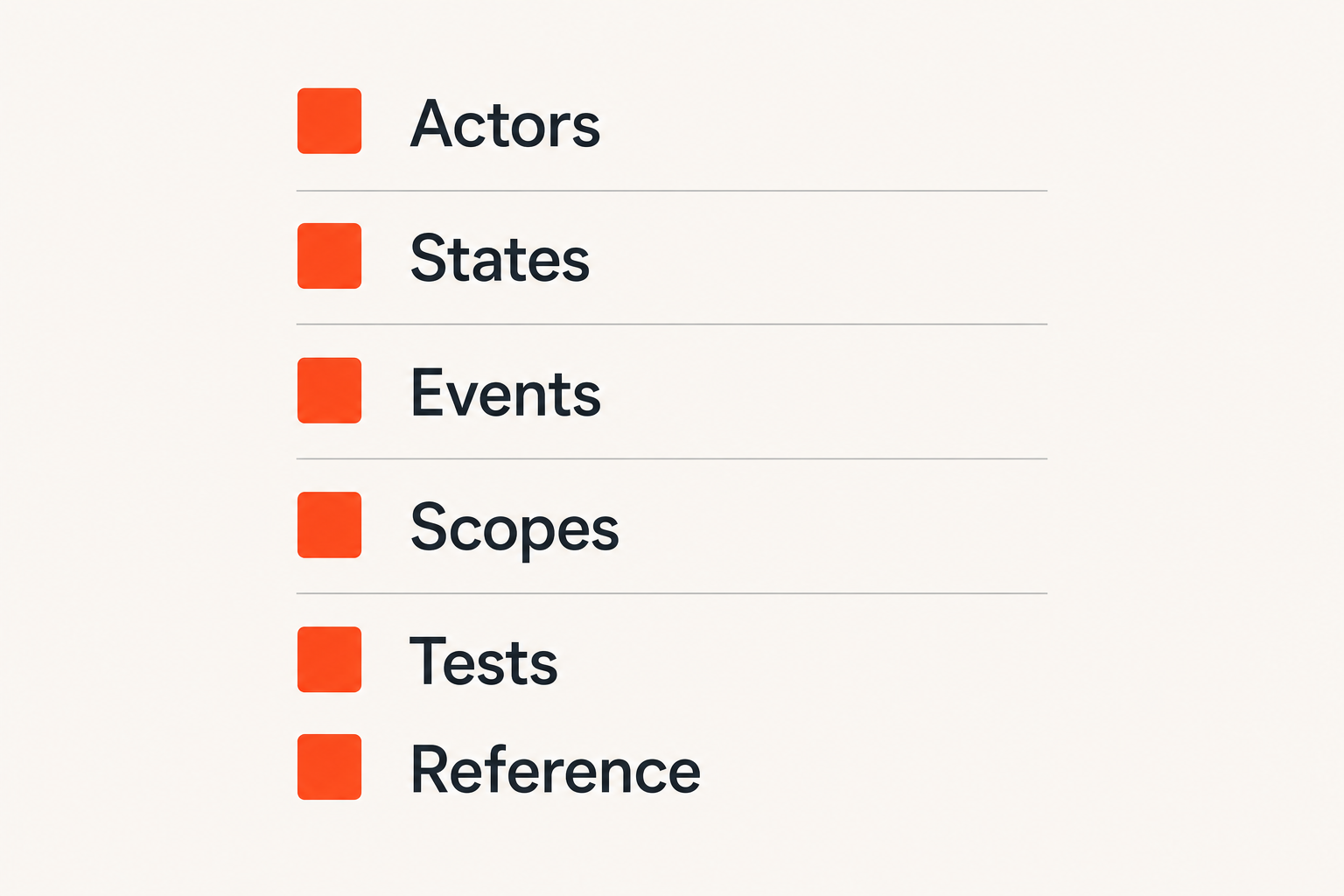
A standards def should be implemented in slices. If you try to standardize every object before anything ships, you will produce a document nobody trusts. If you ship without a standard, you will hardcode assumptions into every integration. The middle path is to standardize one painful workflow deeply, then generalize.
Start with one high-friction path
Pick a workflow where multiple systems already disagree. Good candidates include:
- agent requests credential access for a third-party plugin
- agent invokes a tool that writes to a production system
- human reviews and approves a risky action
- payment authorization becomes product entitlement
- external event updates an agent task state
Then map the workflow as a sequence:
- Define the actors and authority chain.
- Define the core object and its states.
- Define events emitted at each transition.
- Define required scopes and policy checks.
- Define failure and retry behavior.
- Define audit records and retention expectations.
- Build fixtures and conformance tests.
- Implement in one SDK or reference service.
- Validate with one real integration.
This is slow only compared with writing a doc. It is fast compared with debugging five incompatible integrations later.
Ship conformance tests before evangelism
Open standards fail when adoption depends on interpretation. Conformance tests reduce interpretation. They also expose gaps earlier than meetings do.
Useful test fixtures include:
- valid minimal payload
- valid full payload
- missing required authority field
- duplicate event delivery
- expired credential grant
- revoked consent during retry
- policy gate requiring human review
- terminal event replay
A maintainer should be able to run a small test suite and know whether their plugin, SDK, or hosted product respects the standard. That does more for adoption than another architecture diagram.
Common failure modes in standards def work
Standards work attracts abstraction. Abstraction is useful until it hides operational decisions. The failure modes below show up often in agent platform teams, especially when product pressure moves faster than governance.
What fails
Common failures include:
- defining only request and response schemas, with no lifecycle
- using user_id for every actor type
- treating tool discovery as authorization
- omitting idempotency from mutating actions
- logging events without stable correlation identifiers
- allowing credentials to outlive the task that required them
- making human review visible in UI but invisible in events
- versioning documents but not payloads
- treating payments as a button rather than a ledger workflow
These problems compound. A missing actor model makes audit weak. Weak audit makes review unverifiable. Unverifiable review makes credential use risky. Risky credential use makes plugin adoption slower.
Prior work on agent-ready investigation systems shows the same pattern: provenance, permissions, schemas, review gates, and audit trails matter more than clever wrappers, as discussed in OSINT tools in 2026.
What works
What works is less glamorous:
- small standards with strong runtime semantics
- explicit ownership for every transition
- machine-readable policy inputs
- stable event envelopes
- typed failure reasons
- scoped delegation
- reference implementations
- test fixtures
- migration paths for older clients
Practical rule: A standard should make the safe path easier than the local workaround. If teams need private exceptions to ship basic workflows, the standard is incomplete.
Versioning also matters. Do not break integrators because a field name looks cleaner. Additive changes, feature flags, declared capabilities, and deprecation windows are usually more valuable than purity.
Where logicsrc.com fits
LogicSRC is built around the idea that agent interoperability needs open surfaces, not one giant control plane. Developers and platform teams need shared primitives for identity, coordination, agents, payments, events, credential sharing, MCP, and auditable workflows.
Open surfaces for builders
The goal is not to own every runtime. The goal is to make the boundaries between runtimes safer and easier to implement. A platform architect should be able to connect an agent host, a plugin, a payment system, and a review workflow without inventing a new trust model for each handoff.
You can think of LogicSRC as a place for practical standards surfaces: schemas, primitives, conventions, and implementation patterns for teams building interoperable systems. The broader project context is available on the LogicSRC about page.
Adoption without platform lock-in
Standards are most useful when they reduce switching costs and integration risk. That does not mean every implementation must be identical. It means the core contracts are stable enough that tools can interoperate across products, SDKs, and hosted services.
For an open source maintainer, this means fewer bespoke adapters. For a developer tools company, it means a cleaner integration surface. For a platform team, it means audit, policy, and credentials do not depend on one vendor-specific workflow.
The mistake teams make is assuming openness is only a licensing posture. In agent systems, openness is also an operational posture: can another system verify the action, understand the authority, replay the event, and revoke the grant?
Closing checklist for standards def decisions
A standards def should leave teams with fewer ambiguous runtime decisions. If it does not change implementation behavior, it is probably documentation, not a standard.
Questions to ask before publishing
Before you publish or adopt a standard, ask:
- What object lifecycle does this standard control?
- Which systems must implement it?
- Which fields are required for audit, not just convenience?
- How are actor, agent, executor, and principal represented?
- What happens when delivery is duplicated or delayed?
- How does revocation propagate?
- Which failures are retryable?
- How does a human review decision become machine-readable?
- Can old clients coexist with new versions?
- Is there a conformance test suite?
If the answers are vague, do not expand the scope. Tighten the workflow.
The standard is real when teams can operate it
The real test is production behavior. Can support explain what happened? Can security revoke access? Can finance reconcile the transaction? Can a plugin maintainer validate compatibility? Can an agent host enforce policy before execution? Can another system replay the event stream and reach the same conclusion?
That is the difference between a standards def that reads well and a standards def that works.
In 2026, AI agent interoperability will not be solved by another glossary. It will be solved by runtime contracts that make identity, authority, events, credentials, payments, reviews, and audit trails explicit. That is the standards def worth building.
Try logicsrc.com
You are writing for developers and platform teams building interoperable AI agent systems, SDKs, plugins, and hosted products. Try logicsrc.com.